
Google DeepMind CEO Says AGI Could Arrive by 2030 — And Today’s AI Agents Are Just the “Practice Run”
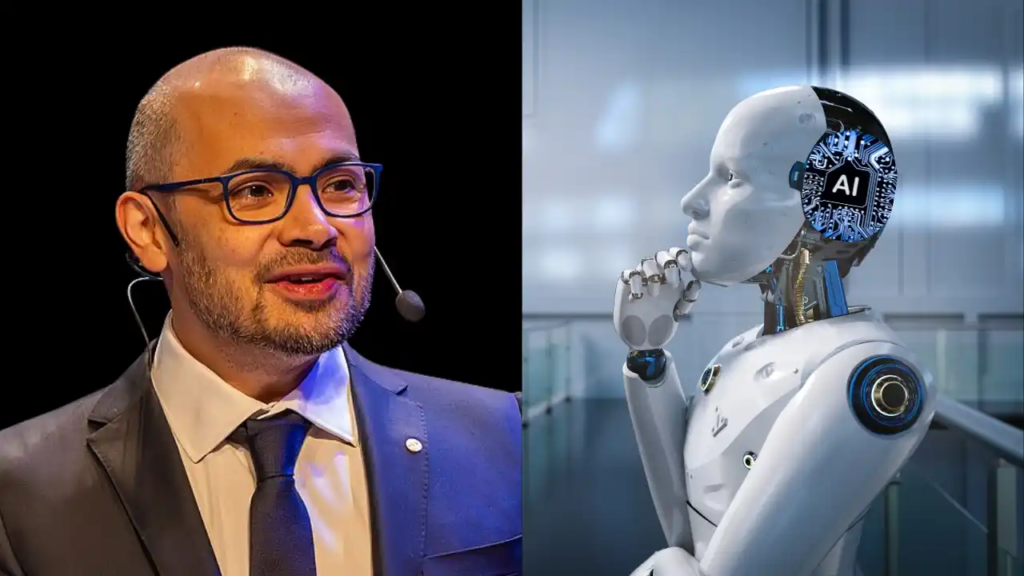
Artificial Intelligence is no longer a futuristic concept hidden inside science fiction novels. It is now writing emails, generating videos, coding software, helping doctors, and even acting as digital assistants. But according to Google DeepMind CEO Demis Hassabis, what we are seeing today is only the beginning.
In a recent statement, Hassabis suggested that Artificial General Intelligence (AGI) — AI systems capable of matching or surpassing human intelligence across most tasks — could arrive by 2030. More interestingly, he described today’s AI agents as merely a “practice run” for what is coming next.
That statement carries massive implications for technology, business, education, and society itself.
What Exactly Is AGI?
Most AI systems today are specialized tools. Chatbots generate text, recommendation systems suggest content, and image models create visuals. These systems are powerful, but they are narrow in scope.
AGI is different.
Artificial General Intelligence refers to machines that can reason, learn, adapt, and solve problems across multiple domains much like humans can. An AGI system would not simply follow patterns from training data — it would understand context, make decisions, and potentially develop new strategies on its own.
If current AI models are calculators with personality, AGI would be closer to a digital mind.
Why DeepMind’s Prediction Matters
Google DeepMind is not just another AI company. It is one of the world’s leading AI research labs, responsible for breakthroughs such as AlphaGo, AlphaFold, and advanced reinforcement learning systems.
When the CEO of DeepMind predicts AGI within the next decade, the world listens.
Hassabis’ comments suggest that the rapid improvements in large language models, multimodal AI, and autonomous agents are accelerating faster than many experts expected. AI systems are evolving from tools that answer prompts into systems capable of planning, memory, decision-making, and independent execution.
That transition could redefine how humans interact with technology.
AI Agents: The “Practice Run”
The rise of AI agents is already changing the digital landscape.
Unlike traditional chatbots, AI agents can perform tasks autonomously. They can browse websites, summarize documents, schedule meetings, generate code, and interact with software on behalf of users.
Companies are racing to build more capable agents because they represent the next major shift in computing.
According to Hassabis, these agents are essentially training wheels for AGI.
Why?
Because they demonstrate the core building blocks of autonomous intelligence:
- Memory
- Reasoning
- Planning
- Tool usage
- Self-correction
- Long-term task execution
Today’s agents still make mistakes and require human supervision, but their capabilities are improving at remarkable speed. The “practice run” comment implies that the industry is learning how to build systems that eventually become far more general and intelligent.
The Race Toward 2030
The timeline of AGI remains highly debated.
Some researchers believe AGI is decades away. Others think it could emerge surprisingly soon due to exponential advances in computing power and model training.
What makes the current moment different is the pace of progress.
Just a few years ago, AI struggled with coherent conversations. Today, models can generate software applications, analyze medical reports, create cinematic videos, and assist with scientific research.
The leap from narrow AI to more generalized intelligence may not happen overnight — but the building blocks are already visible.
Tech giants including Google, OpenAI, Microsoft, Anthropic, and Meta are investing billions into AI infrastructure because they believe the next generation of systems will fundamentally reshape the economy.
Opportunities and Risks
The arrival of AGI could unlock enormous benefits.
Potential advantages include:
- Accelerated scientific discovery
- Personalized education at scale
- Major healthcare breakthroughs
- Increased productivity
- Smarter automation
- Faster innovation across industries
However, the risks are equally significant.
Critics warn about:
- Job displacement
- Misinformation
- AI safety concerns
- Concentration of power
- Ethical misuse
- Loss of human oversight
Even leading AI researchers acknowledge that society is not fully prepared for systems approaching human-level reasoning.
That is why conversations around AI governance, regulation, and alignment are becoming more urgent.
A Defining Decade for Humanity
Whether AGI arrives by 2030 or later, one thing is clear: the world is entering a transformative era.
The current generation of AI tools may eventually be remembered as the early experiments that paved the way for something far more powerful. Hassabis’ “practice run” remark reflects a growing belief inside the tech industry that today’s breakthroughs are only the first chapter.
The next few years could determine how humanity coexists with increasingly intelligent machines.
And for the first time, the future of AGI no longer feels theoretical — it feels close enough to plan for.
Final Thoughts
Demis Hassabis’ prediction highlights both the excitement and uncertainty surrounding AI’s future. While AGI remains an evolving concept, the rapid advancement of AI agents suggests that the boundaries between human and machine capabilities are shrinking faster than expected.
If current AI systems are the rehearsal, the main performance may arrive sooner than the world is ready for.