
AI Can’t Replace These 3 Skills, Says LinkedIn CEO: “Only Humans Decide What Risk”
Artificial intelligence is rapidly reshaping the way we work. From automating repetitive tasks to generating content and analyzing data at scale, AI has become a powerful force across industries. Yet, despite its impressive capabilities, there are still areas where machines fall short. According to LinkedIn’s CEO, three essential human skills remain beyond AI’s reach—skills that will define the future of work.
This insight is not just reassuring; it’s a call to action. As AI continues to evolve, understanding and strengthening these uniquely human abilities will be critical for anyone looking to stay relevant.
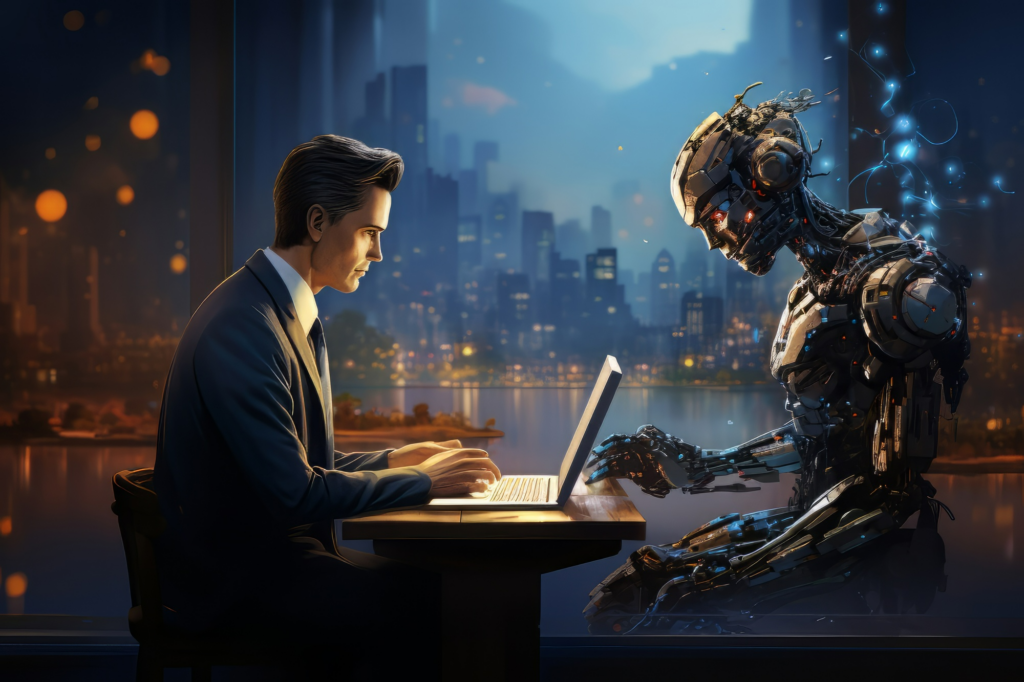
1. Judgment in Uncertainty
AI thrives on data. It learns from patterns, probabilities, and past outcomes. But real life often operates in gray areas where data is incomplete, conflicting, or entirely absent. This is where human judgment becomes indispensable.
Deciding what risks to take—and when—is not purely a mathematical calculation. It involves context, ethics, experience, and intuition. For example, a business leader deciding whether to enter a new market must weigh not just financial projections, but also cultural nuances, political stability, and long-term vision.
AI can present scenarios and احتمالات, but it cannot truly “understand” consequences in a human sense. It doesn’t bear responsibility. Humans do. That responsibility is what makes judgment a fundamentally human skill.
2. Creativity with Purpose
While AI can generate art, write articles, and even compose music, its creativity is derivative. It builds on existing data, remixing patterns it has already seen. Human creativity, on the other hand, is driven by intent, emotion, and meaning.
True creativity is not just about producing something new—it’s about producing something that matters. It’s about asking why, not just how.
For instance, creating a compelling brand story or designing a product that resonates with people requires empathy and cultural awareness. These are qualities AI cannot authentically replicate. It may mimic style, but it cannot originate purpose.
As workplaces become more automated, the demand for meaningful, human-centered creativity will only grow.
3. Building Trust and Relationships
At its core, work is a human endeavor. Collaboration, leadership, negotiation, and mentorship all rely on trust. And trust is built through shared experiences, emotional intelligence, and authenticity.
AI can simulate conversation and even predict behavior, but it cannot form genuine relationships. It doesn’t experience empathy, accountability, or moral obligation.
Consider a manager supporting a struggling employee. The situation requires sensitivity, understanding, and the ability to read between the lines—skills rooted in human connection. AI can assist with data or suggestions, but it cannot replace the human presence needed in such moments.
In a world increasingly mediated by technology, the ability to build and maintain trust will become even more valuable.
The Bigger Picture
The rise of AI is not about replacing humans—it’s about redefining what makes us valuable. Tasks that are routine, predictable, and data-driven will increasingly be handled by machines. But the skills that involve ambiguity, meaning, and connection will remain firmly in human hands.
This shift presents both a challenge and an opportunity. Instead of competing with AI, individuals should focus on complementing it. That means developing critical thinking, emotional intelligence, and the ability to navigate complex decisions.
Conclusion
AI is transforming the workplace, but it is not rendering humans obsolete. If anything, it is highlighting the importance of what makes us uniquely human.
Judgment in uncertainty, creativity with purpose, and the ability to build trust are not just “soft skills”—they are the foundation of leadership and innovation. As technology advances, these skills will not diminish in value; they will become the differentiators.
The future of work belongs not to those who can outcompute machines, but to those who can do what machines cannot.