
AI Just Solved a 20-Year Math Problem — Are Humans Still Needed?
The recent breakthrough of artificial intelligence solving a decades-old math problem has sparked a powerful question: Are humans becoming obsolete? While the headline sounds dramatic, the reality is far more nuanced—and far more optimistic.
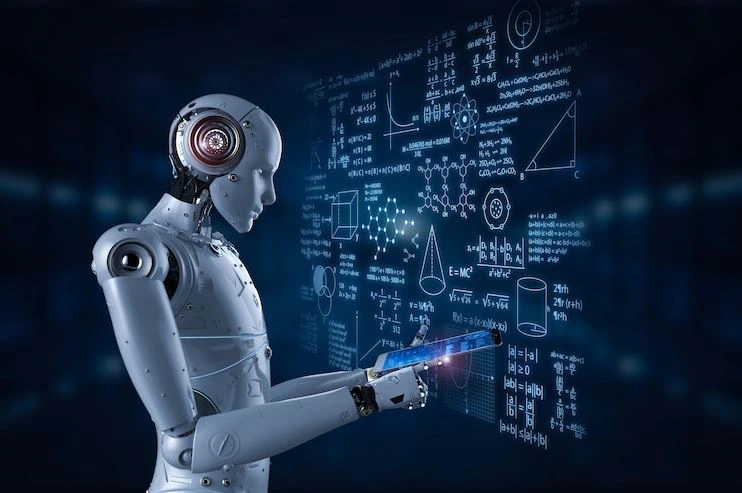
The Rise of AI in Problem Solving
Artificial intelligence has made remarkable progress in recent years. From generating human-like text to predicting protein structures and now solving complex mathematical problems, AI is proving its ability to tackle challenges once thought to be exclusive to human intellect.
When an AI system solves a problem that puzzled mathematicians for 20 years, it’s easy to assume that machines are replacing human thinking. But that’s not the full story.
What AI Actually Does Well
AI excels in areas such as:
- Processing massive amounts of data quickly
- Identifying patterns that humans might miss
- Testing countless possibilities in a short time
- Automating repetitive or highly technical tasks
In mathematics, this means AI can explore solution paths at a scale no human can match. It can assist in proving theorems, verifying results, and even suggesting new approaches.
What AI Still Cannot Replace
Despite its strengths, AI has limitations:
1. Creativity and Original Thought
AI works based on existing data and patterns. Humans, on the other hand, can think abstractly, imagine entirely new concepts, and redefine problems.
2. Intuition and Insight
Many mathematical breakthroughs come from intuition—those “aha” moments that machines cannot truly replicate.
3. Purpose and Direction
AI does not decide what problems matter. Humans choose the questions, define the goals, and give meaning to the work.
4. Ethical Judgment
AI cannot determine what should or should not be done. Human values guide how technology is used.
AI as a Partner, Not a Replacement
Rather than replacing humans, AI is becoming a powerful collaborator. Think of it as a tool that enhances human capability:
- Mathematicians can explore deeper theories faster
- Scientists can accelerate discoveries
- Engineers can build more advanced systems
- Creators can produce more innovative work
The relationship is shifting from human vs. machine to human + machine.
A New Era of Intelligence
We are entering a phase where intelligence is no longer limited to humans alone. This doesn’t reduce human importance—it changes it.
Humans are moving from being the sole problem-solvers to being:
- Designers of intelligent systems
- Interpreters of results
- Decision-makers with context and values
- Innovators who push boundaries beyond data
Final Thoughts
AI solving a 20-year math problem is not the end of human relevance—it’s a sign of progress. It shows what we can achieve when technology advances.
The real question is not whether humans are still needed, but how we will evolve alongside AI.
And the answer is clear:
Humans are not being replaced—they are being amplified.