
Earth May Be Observed From the Moon Instead of Orbital Satellites in the Future
For decades, Earth observation has relied heavily on satellites orbiting the planet. These systems monitor climate change, track natural disasters, study weather patterns, and support global communications. However, scientists are now exploring a surprising alternative: observing Earth from the Moon.
With renewed interest in lunar missions and permanent Moon infrastructure, researchers believe the Moon could become a powerful and stable platform for long-term Earth observation.
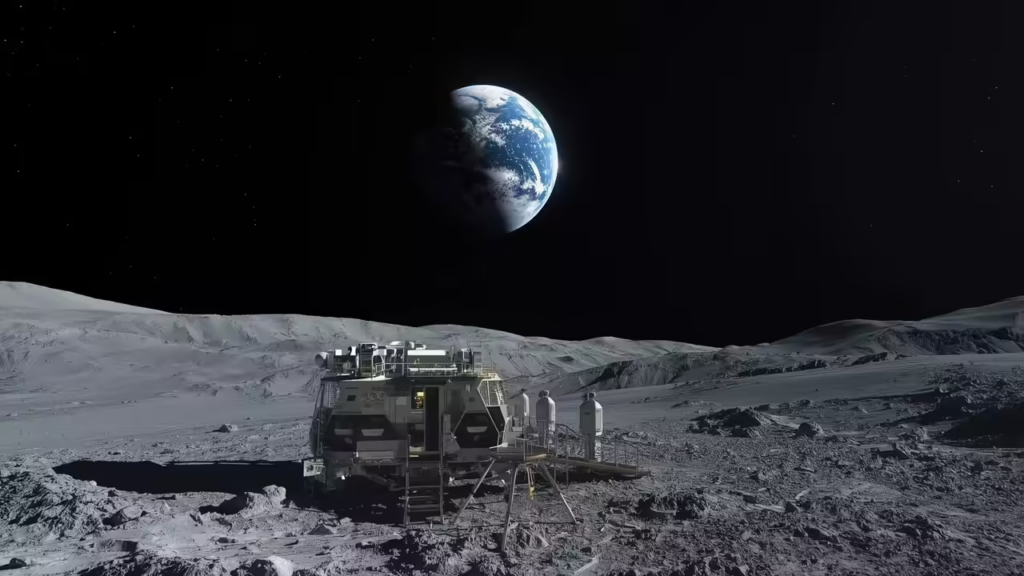
Why Look at Earth From the Moon?
The Moon offers a unique and constant vantage point. Unlike satellites that orbit Earth every few hours or days, the Moon maintains a stable position relative to our planet.
This allows for:
- Continuous monitoring of Earth’s full disk
- Long-term climate and atmospheric studies
- Reduced need for frequent satellite replacements
From the Moon, scientists can observe Earth as a complete system rather than fragmented snapshots.
Advantages Over Traditional Earth-Orbiting Satellites
1. Stability and Longevity
Satellites in low Earth orbit face atmospheric drag and radiation, limiting their lifespan. Lunar-based instruments could operate for decades with minimal repositioning.
2. Broader Perspective
From the Moon, Earth appears as a single object, making it easier to track:
- Global cloud movement
- Energy balance
- Climate trends over long periods
3. Reduced Orbital Congestion
Earth’s orbit is becoming crowded with satellites and debris. Lunar observation reduces dependence on congested orbital paths.
What Kind of Data Could Be Collected?
Lunar-based Earth observation systems could monitor:
- Climate change indicators
- Greenhouse gas concentrations
- Ocean color and health
- Ice cap changes
- Large-scale weather systems
This data would be especially useful for climate modeling and environmental forecasting.
How Would the Technology Work?
Scientists propose placing advanced telescopes and sensors on the Moon’s surface or in lunar orbit. These instruments would transmit data back to Earth using relay satellites or direct communication links.
Future lunar bases could also:
- Maintain and upgrade instruments
- Power systems using solar energy
- Enable real-time data calibration
Challenges of Observing Earth From the Moon
Despite its promise, lunar Earth observation faces challenges:
- High cost of lunar deployment
- Communication delays compared to Earth orbit
- Limited viewing angles during certain lunar phases
- Exposure to extreme temperatures and radiation
However, advancing space technology and planned Moon missions are steadily reducing these barriers.
Why This Idea Is Gaining Momentum Now
Interest in lunar Earth observation is growing due to:
- Renewed global Moon exploration programs
- Long-term climate monitoring needs
- Advances in sensor miniaturization
- Demand for more reliable and stable observation platforms
Agencies like NASA and international partners are already studying the feasibility of such systems.
What This Means for the Future of Space Science
If successful, Moon-based Earth observation could complement or partially replace traditional satellites, creating a more resilient global monitoring network.
Rather than relying on hundreds of short-lived satellites, future systems may depend on fewer, more powerful lunar observatories working alongside orbiting platforms.
Final Thoughts
Observing Earth from the Moon may sound futuristic, but it represents a practical evolution in space science. With its stable position and wide perspective, the Moon could become a key hub for understanding our planet’s changing environment.
As humanity expands its presence beyond Earth, the Moon may not only help us explore space—but also help us protect the planet we call home.