
What Is China’s ‘Starlink Killer’? Inside the High-Power Microwave Weapon Targeting Satellites
China is reportedly developing a new high-power microwave (HPM) weapon that experts are calling a potential “Starlink killer.” The system is designed to disrupt or disable satellites, especially large constellations like SpaceX’s Starlink, which play a growing role in global communications and defense.
But what exactly is this weapon, how does it work, and why is it raising concerns worldwide? Let’s break it down.
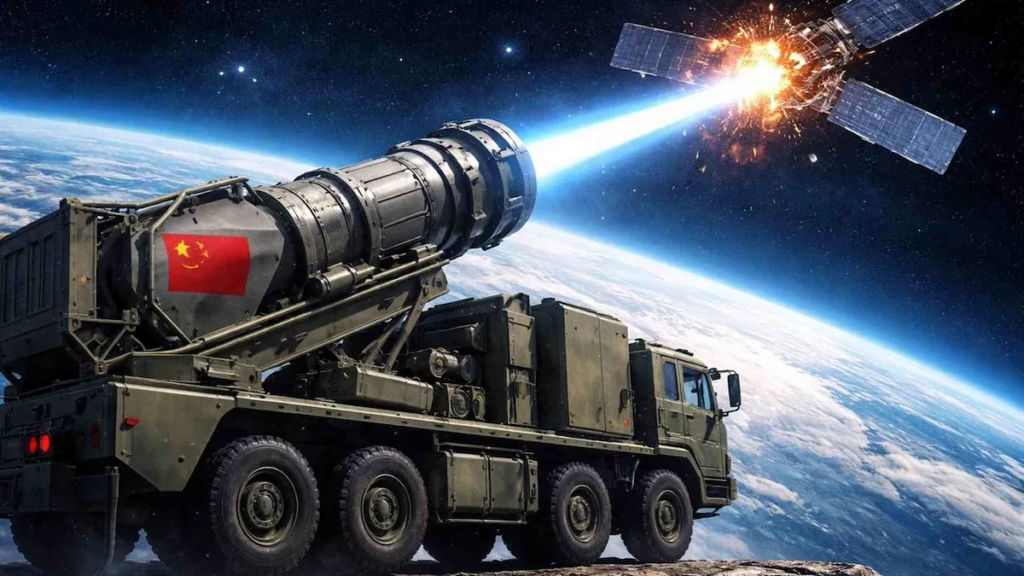
What Is the “Starlink Killer”?
The term “Starlink killer” refers to a high-power microwave weapon that can emit intense bursts of electromagnetic energy toward satellites.
Unlike missiles or physical attacks, this weapon:
- Does not destroy satellites physically
- Aims to disable or disrupt electronics
- Can affect multiple satellites at once
Its main target is low Earth orbit (LEO) satellite networks, such as Starlink, which rely on thousands of interconnected satellites.
How Does a High-Power Microwave Weapon Work?
High-power microwave weapons release concentrated microwave energy that interferes with electronic systems.
When directed at satellites, this energy can:
- Overload onboard circuits
- Damage sensitive components
- Disrupt communications and data links
- Temporarily or permanently disable satellites
Because satellites depend heavily on electronics, even short exposure can cause serious problems.
Why Is Starlink a Key Target?
Starlink operates thousands of satellites in low Earth orbit, providing:
- High-speed internet
- Military communications support
- Emergency connectivity in conflict zones
These satellites are:
- Closer to Earth
- Easier to target than traditional high-orbit satellites
- Highly networked, meaning disruption can ripple across the system
This makes Starlink-style networks strategically important—and vulnerable.
Why Is China Developing This Technology?
China, like other major powers, is investing heavily in space and counter-space capabilities. Satellite systems now play a critical role in:
- Military operations
- Navigation and GPS services
- Intelligence and surveillance
- Global communications
A weapon that can disable satellites without debris or explosions offers a cleaner and quieter way to gain strategic advantage during conflicts.
Is This a New Kind of Space Warfare?
Yes. High-power microwave weapons are part of a broader shift toward non-kinetic warfare.
Instead of blowing things up, these systems aim to:
- Blind
- Jam
- Disrupt
- Disable
This reduces visible damage while still weakening an opponent’s capabilities.
Can This Weapon Affect Earth-Based Systems?
In theory, similar microwave technology can also be used against:
- Drones
- Radar systems
- Communication infrastructure
However, the reported focus of this system is space-based targets, especially satellites in low orbit.
Is the Technology Already Operational?
Public information suggests the system is still under development or testing. Exact capabilities remain classified, and details come mainly from defense analysts and research reports.
Like many advanced weapons, its true effectiveness may not be known until real-world deployment.
Why This Matters Globally
Satellite networks support everything from:
- Internet access
- Banking systems
- Weather forecasting
- Emergency response
Any weapon that threatens satellite stability raises concerns about:
- Global connectivity
- Economic security
- Military escalation in space
It also increases calls for international rules governing space warfare.
Final Thoughts
China’s so-called “Starlink killer” highlights how space has become a new frontier for strategic competition. High-power microwave weapons represent a shift toward silent, electronic attacks rather than visible destruction.
As satellite networks continue to expand, protecting space infrastructure will become just as important as defending systems on land, sea, and air.