
AI Adoption Shifts from Experiment to Enterprise Reality
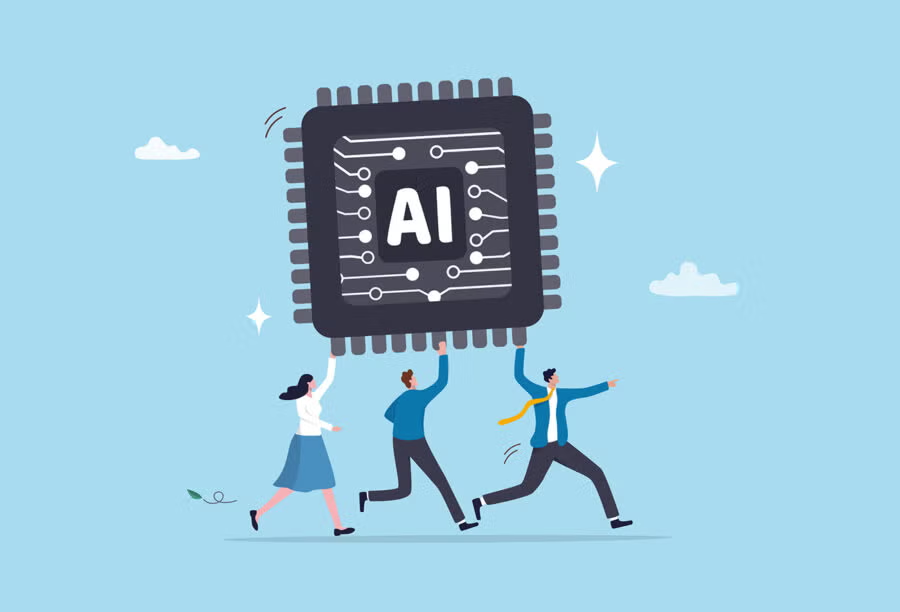
For years, artificial intelligence (AI) was treated as an exciting experiment something companies tested in innovation labs or showcased in pilot projects. In 2025, that mindset has fundamentally changed. AI is no longer a “future idea.” It has become a practical, enterprise-grade tool delivering measurable business value.

Organizations across industries are moving beyond experimentation and embedding AI into their core operations to drive productivity, efficiency, and smarter decision-making.
From Proof of Concept to Production
Early AI initiatives often struggled to move past proof-of-concept stages. Models worked in isolation but failed to scale across real-world business systems. Today, enterprises are overcoming those barriers with better data infrastructure, mature AI platforms, and clearer use cases.
AI solutions are now deployed directly into production environments powering customer support systems, automating workflows, analyzing massive datasets, and enhancing employee productivity at scale.
AI as a Productivity Multiplier
One of the biggest shifts is how AI is being used to amplify human productivity rather than replace it. Teams are leveraging AI tools to:
- Automate repetitive and time-consuming tasks
- Generate insights from complex data in seconds
- Assist developers with code generation and testing
- Support marketing, HR, and finance teams with faster analysis
This human-AI collaboration is helping organizations do more with fewer resources while improving output quality.
Enterprise-Wide Adoption Across Departments
AI is no longer limited to IT or data science teams. It is now deeply embedded across departments:
- Customer Support: AI-powered chatbots and sentiment analysis improve response times and satisfaction
- Sales & Marketing: Predictive analytics and personalization drive higher conversion rates
- Operations: AI optimizes supply chains, inventory, and logistics
- HR: Resume screening, workforce analytics, and employee engagement tools
This broad adoption signals a major shift from niche experimentation to organization-wide transformation.
Stronger Focus on Governance and Trust
As AI becomes mission-critical, enterprises are prioritizing responsible AI practices. Governance, data privacy, model transparency, and bias reduction are now key considerations in AI strategy.
Companies are investing in AI policies, compliance frameworks, and monitoring systems to ensure that AI solutions are ethical, secure, and aligned with business values.
AI as a Core Pillar of Tech Strategy
Rather than being an add-on, AI is now a foundational element of enterprise technology roadmaps. It is shaping decisions around cloud infrastructure, cybersecurity, data platforms, and workforce upskilling.
Enterprises that successfully integrate AI into their strategy are gaining a competitive edge moving faster, making better decisions, and adapting more quickly to market changes.
Looking Ahead
The shift from AI experimentation to enterprise adoption marks a defining moment in digital transformation. Organizations that treat AI as a long-term investment not a short-term trend will lead the next wave of innovation.
AI is no longer just about what’s possible. It’s about what’s practical, scalable, and impactful and enterprises are proving that the future of work is already here.
w