
AI-Powered Wearables: From Fitness Trackers to Always-On Personal AI Assistants
Introduction
AI-powered wearables are undergoing a radical transformation. What once started as simple step counters and heart-rate monitors has evolved into always-listening, context-aware AI companions. Today’s wearables don’t just track your health — they listen, understand, summarize, translate, and assist in real time.

According to coverage from The Verge, this new wave of wearables signals a major shift: AI is moving off the screen and onto the body.
The Rise of AI Smart Glasses
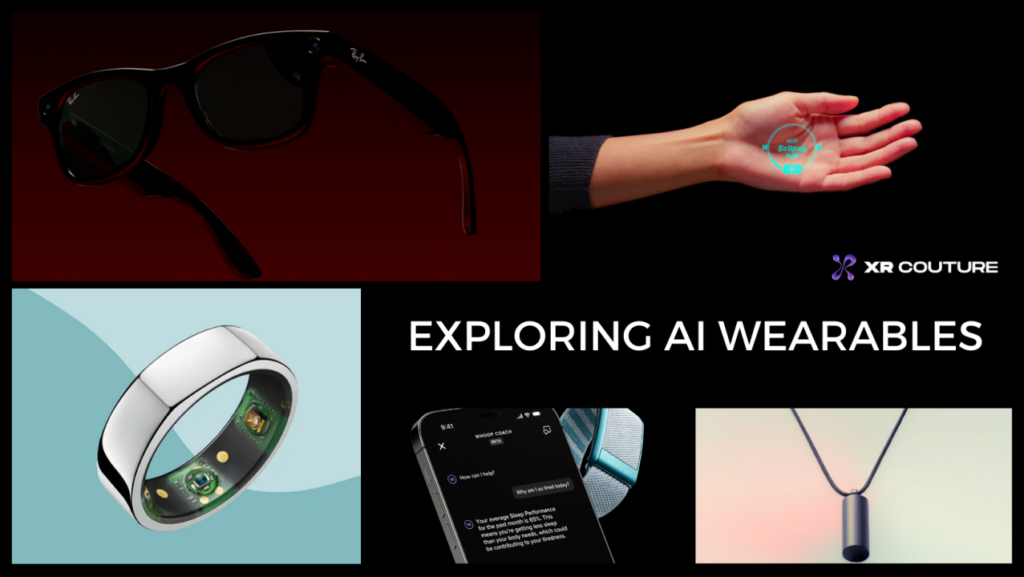
AI smart glasses are leading this transformation. Unlike traditional AR devices, modern AI glasses focus on practical, everyday intelligence rather than flashy visuals.
Key Capabilities
- Real-time conversation summarization
- Live language translation
- Contextual insights during meetings
- On-device AI processing for faster responses and improved privacy
These glasses can listen to conversations and quietly provide insights — names, action items, or summaries — without interrupting the user. This makes them especially valuable for professionals, travelers, and multilingual environments.

Always-Listening AI Pendants & Smart Rings
Beyond glasses, a new category of ambient AI wearables is emerging.
AI Pendants
- Constantly listen for context
- Capture conversations and turn them into notes
- Provide reminders based on spoken interactions
- Act as a “second brain” throughout the day
Smart Rings with AI
- Voice-enabled note taking
- Gesture-based interaction
- Subtle notifications without screen dependency
These devices prioritize invisibility and minimalism, blending into daily life while continuously collecting and interpreting information.
Wearables as Personal AI Companions
Wearables are evolving into:
The biggest shift isn’t hardware — it’s purpose.
- Personal knowledge assistants
- Memory augmentation tools
- Context-aware advisors
- Always-available AI copilots
Instead of opening apps or typing prompts, users simply exist, and the AI adapts in the background.
This represents a move toward ambient computing, where technology fades into the environment while intelligence remains ever-present.
Why This Trend Matters
1. AI Moves Beyond the Smartphone
Wearables reduce screen dependency and enable hands-free, frictionless interaction.
2. Continuous Context Awareness
Unlike phones, wearables capture ongoing context, making AI responses more relevant and timely.
3. Productivity & Accessibility Boost
From real-time translation to automatic meeting summaries, these tools help:
- Professionals
- Students
- Elderly users
- People with disabilities
Privacy & Ethical Concerns
Always-listening devices raise serious questions:
- Who owns the recorded data?
- Is processing done on-device or in the cloud?
- How are bystanders protected?
To gain mass adoption, companies must prioritize:
- On-device AI models
- Clear consent indicators
- Strong data encryption
- Transparent privacy policies
Without trust, even the most powerful AI wearables will fail.
The Future of AI Wearables
We are entering an era where wearables:
- Replace note-taking apps
- Act as memory assistants
- Support real-time decision-making
- Integrate seamlessly with daily routines
Soon, asking an AI for help won’t require a screen — it will already be listening, learning, and assisting.
Final Thoughts
AI-powered wearables are no longer just accessories — they are becoming extensions of human cognition. As fitness tracking fades into the background, intelligence, awareness, and assistance take center stage.
The future of AI isn’t in your pocket.
It’s on your face, your finger, and around your neck.