Why One Side of the Earth Is Cooling Faster And What It Reveals About Our Planet
Introduction
Scientists have discovered an intriguing phenomenon: one hemisphere of the Earth appears to be losing internal heat faster than the other. While the difference is subtle and occurs over millions of years, this uneven cooling is helping researchers better understand our planet’s deep interior, tectonic activity, and long-term evolution.
Earth Is Slowly Cooling — But Not Even Evenly
The Earth formed about 4.5 billion years ago as a hot, molten body. Since then, it has been gradually cooling as internal heat escapes into space. This heat comes from:
- Leftover energy from planetary formation
- Radioactive decay of elements like uranium, thorium, and potassium
- Heat released from the Earth’s core
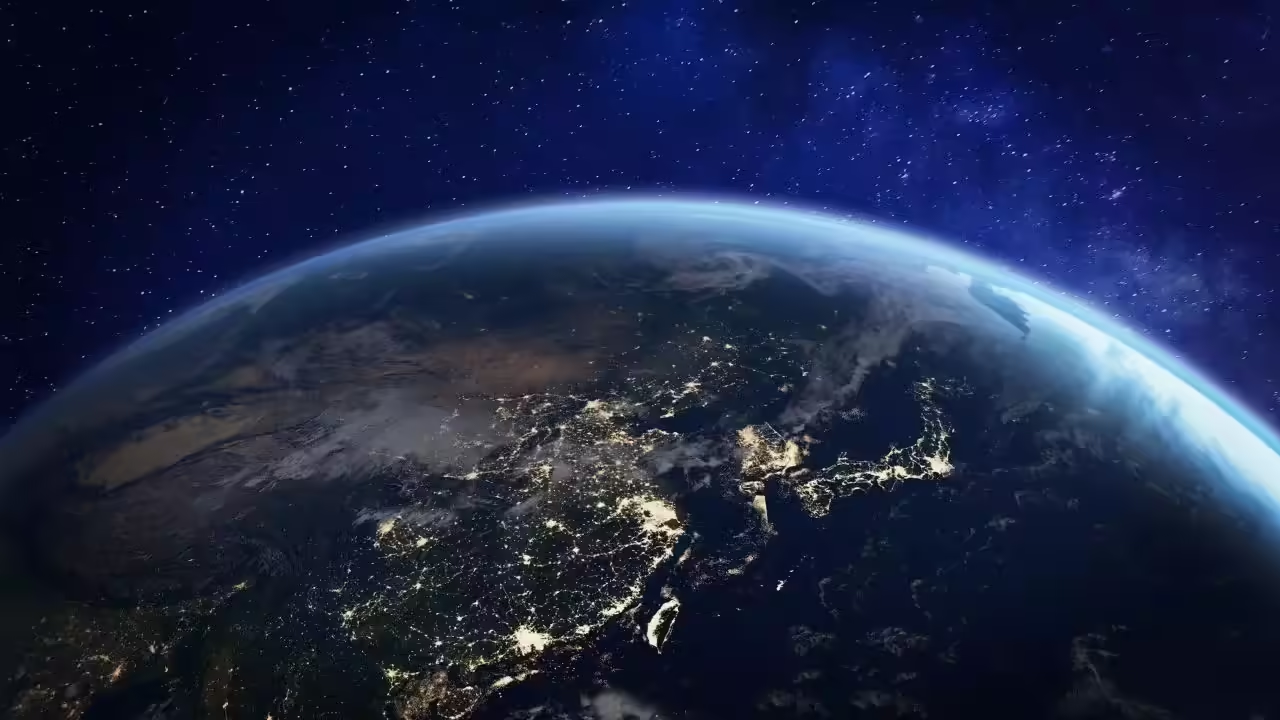
Recent studies suggest that the Eastern Hemisphere (including Africa, Europe, Asia, and Australia) may be releasing heat more efficiently than the Western Hemisphere (the Americas and surrounding regions).
What Causes One Side to Cool Faster?
1. Uneven Distribution of Radioactive Elements
The Earth’s crust and mantle do not contain radioactive heat-producing elements evenly. Regions with higher concentrations generate more internal heat, while areas with fewer such elements cool faster.
2. Differences in Crust Thickness
- Continental crust is thick and acts like an insulating blanket.
- Oceanic crust is thinner and allows heat to escape more easily.
Variations in crust structure across hemispheres contribute to differences in heat flow.
3. Mantle Convection Patterns
Heat moves upward through mantle convection, similar to boiling water. Scientific imaging shows that hot plumes and cooler sinking slabs are unevenly distributed, creating regional differences in heat loss.
4. Tectonic Plate Activity
Regions with:
- Active subduction zones
- Mid-ocean ridges
- Volcanic hotspots
allow heat to escape more rapidly. Tectonically active zones play a major role in the planet’s heat balance.
How Scientists Discovered This
Researchers use advanced techniques such as:
- Seismic tomography to map temperature variations deep inside Earth
- Global heat-flow measurements from boreholes and ocean studies
- Satellite-based gravity and magnetic data
- Geochemical analysis of rocks and volcanic materials
Combining these data sources allows scientists to model global and hemispheric heat-loss patterns.
What This Reveals About Our Planet
1. Earth’s Interior Is Highly Complex
The findings confirm that the mantle and crust are heterogeneous, not uniform layers.
2. Insights into Plate Tectonics
Uneven cooling influences:
- Plate movement speeds
- Earthquake and volcanic activity distribution
- Long-term continental evolution
3. Long-Term Planetary Evolution
Differences in heat loss may:
- Affect mantle circulation cycles
- Influence heat flow from the core
- Shape Earth’s surface over hundreds of millions of years
4. Understanding Other Planets
Studying Earth’s cooling helps scientists understand why some planets, like Mars, became geologically inactive while Earth remains active.
Does This Affect Climate or Daily Life?
No. This is a deep-Earth geological process occurring over millions of years. It does not impact weather, climate change, or short-term environmental conditions.
The Bigger Picture
This discovery highlights that Earth is a dynamic and evolving system. Even after billions of years, internal processes continue to shape the planet. Uneven cooling helps scientists better understand:
- The movement of tectonic plates
- Formation of mountains and ocean basins
- The forces that keep Earth geologically active
Conclusion
The idea that one side of the Earth is cooling faster is not a cause for concern—it’s a valuable scientific insight. By studying global heat flow and internal dynamics, researchers are uncovering how our planet works beneath the surface and how it will continue to evolve over geological time.