
Edge Computing & 5G Integration: Powering Real-Time Digital Transformation
Introduction
The rapid growth of data-driven technologies is pushing traditional cloud computing to its limits. Applications such as smart cities, autonomous systems, industrial IoT, and remote healthcare demand ultra-low latency, real-time processing, and high reliability. This is where Edge Computing and 5G integration emerges as a game-changing combination.
By processing data closer to the source and leveraging the speed and low latency of 5G networks, businesses can deliver faster, smarter, and more responsive digital services.
What Is Edge Computing?
Edge computing is a distributed computing model where data processing happens near the data source—such as sensors, devices, or local servers instead of sending everything to a centralized cloud.
Key Characteristics of Edge Computing
- Real-time data processing
- Reduced network congestion
- Improved performance and reliability
- Enhanced data privacy and security
- Lower operational costs for latency-sensitive applications
Understanding 5G Technology
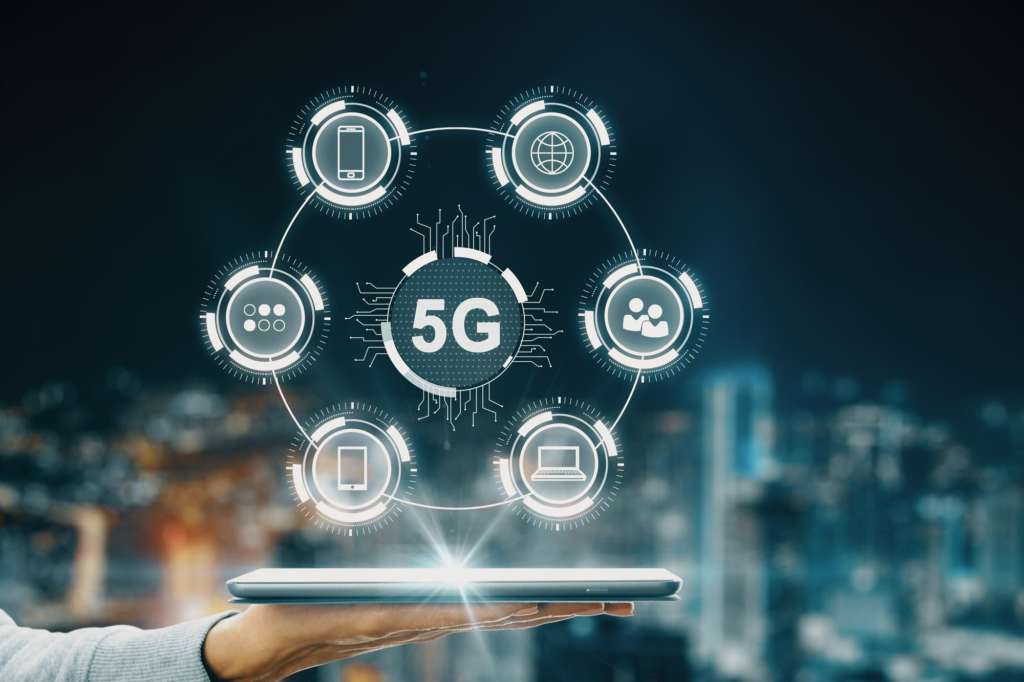
5G is the fifth generation of mobile networks, designed to support high-speed connectivity, massive device density, and ultra-low latency.
Core Features of 5G
- Latency as low as 1 millisecond
- Data speeds up to 100x faster than 4G
- Support for millions of connected devices
- High reliability for mission-critical systems
- Network slicing for customized performance
Why Edge Computing and 5G Are Better Together
Individually, edge computing and 5G are powerful. Together, they unlock a new level of digital capability.
Combined Benefits
- Ultra-Low Latency: Edge nodes process data instantly, while 5G ensures rapid communication.
- Real-Time Intelligence: AI and analytics can run at the edge for immediate decision-making.
- Scalability: 5G supports massive IoT deployments without performance degradation.
- Resilience: Local processing ensures continuity even during cloud connectivity issues.
- Cost Efficiency: Reduced cloud data transfer and bandwidth usage.
Key Use Cases of Edge & 5G Integration
1. Smart Cities
Edge computing enables real-time traffic management, surveillance, energy optimization, and public safety systems. 5G ensures uninterrupted connectivity across urban infrastructure.
2. Internet of Things (IoT)
From smart meters to industrial sensors, edge + 5G allows instant processing of sensor data, predictive maintenance, and automated responses.
3. Autonomous and Connected Vehicles
Vehicles rely on real-time data for navigation and safety. Edge processing minimizes delays, while 5G enables vehicle-to-everything communication.
4. Remote Healthcare and Telemedicine
Low-latency connections support remote surgeries, real-time patient monitoring, and AI-driven diagnostics with minimal delay.
5. Industrial Automation (Industry 4.0)
Factories use edge-based AI for quality control, robotics, and operational optimization, supported by reliable 5G connectivity.
Security and Data Privacy Advantages
Processing sensitive data locally reduces exposure to cyber threats. Edge computing minimizes data movement, while 5G’s advanced security protocols provide encrypted and reliable communication.
Security Benefits
- Reduced attack surface
- Localized data governance
- Faster threat detection and response
- Compliance with data sovereignty regulations
Challenges in Edge & 5G Adoption
Despite its benefits, integration comes with challenges:
- Infrastructure deployment costs
- Complexity of managing distributed systems
- Interoperability between edge platforms
- Skilled workforce requirements
- Regulatory and spectrum considerations
Businesses must adopt a well-planned architecture to overcome these challenges.
The Future of Edge Computing and 5G
As AI, machine learning, and IoT continue to evolve, edge computing powered by 5G will become the backbone of digital ecosystems. Enterprises will move toward decentralized intelligence, enabling smarter applications, faster decisions, and improved customer experiences.
The convergence of edge and 5G is not just an upgrade it’s a foundational shift in how digital services are designed and delivered.
Conclusion
Edge Computing and 5G integration is redefining real-time data processing by bringing intelligence closer to where data is generated. From smart cities and IoT to remote systems and autonomous technologies, this powerful combination enables low-latency, high-performance, and scalable digital solutions.
Organizations that embrace this technology today will gain a significant competitive advantage in tomorrow’s connected world.