
Here Are the Biggest Announcements Coming Out of the 2026 Consumer Electronics Show, Including NVIDIA’s Rubin Chips
The 2026 Consumer Electronics Show (CES) in Las Vegas has once again delivered a flurry of high-impact tech news, with innovations spanning artificial intelligence, autonomous systems, robotics, and next-generation computing. While many companies made major product and platform announcements, none captured more attention than NVIDIA’s unveiling of its Vera Rubin AI platform and Rubin chip architecture — a breakthrough aimed at reshaping how large AI models are trained and deployed.
Here’s a closer look at the most significant announcements from CES 2026 that are likely to influence the tech landscape throughout the year.
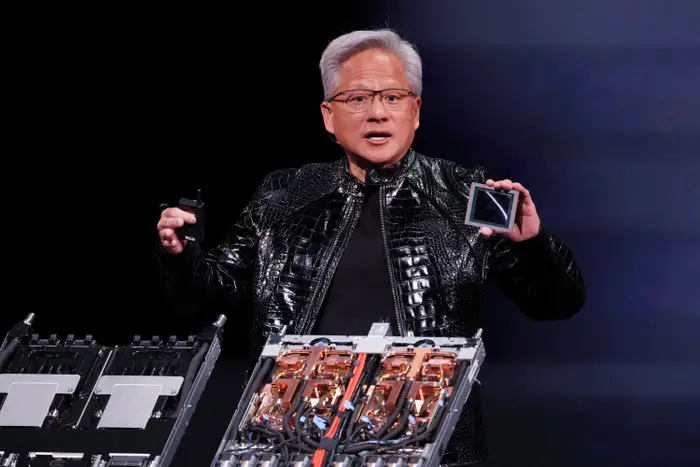
NVIDIA’s Vera Rubin AI Platform: A Leap in Compute Power
At the heart of this year’s show was NVIDIA’s Vera Rubin platform, a new AI computing architecture designed to handle the next generation of artificial intelligence workloads. Introduced by CEO Jensen Huang, this platform combines six tightly integrated chips including the Rubin GPU and Vera CPU with networking and data-processing components to create a powerful rack-scale AI system.
According to NVIDIA, the Rubin architecture can deliver up to five times the inference performance of its previous generation while significantly reducing the cost per AI token, a key metric for large-scale model training and deployment.
What makes Rubin especially notable is not just raw power, but how the components are co-designed for efficiency, memory bandwidth, and inter-chip communication signaling a shift toward integrated hardware platforms rather than standalone processors. The platform is already in full production and expected to roll out through major cloud partners later in 2026.
AI Everywhere: Physical AI, Robotics, and Autonomy
NVIDIA didn’t stop at chips. The company also showcased advances in “physical AI,” a term it uses to describe AI systems trained in virtual environments that can reason and act in the real world. Hugo outlined this vision through:
- Cosmos, an AI foundation model capable of simulating physics and realistic environments for training robots and autonomous systems.
- Alpamayo, an AI model designed to power autonomous vehicles with reasoning capabilities that go well beyond standard driver-assist systems.
These technologies set the stage for real-world robot applications across industries such as manufacturing, logistics, and automotive. In fact, Mercedes-Benz is already planning to integrate NVIDIA’s autonomous AI software into a production model later in 2026.
Competition Heats Up: AMD and Intel Join the Race
NVIDIA may have stolen much of the spotlight, but other semiconductor leaders made their presence felt.
AMD unveiled new AI chip families designed for data centers and high-performance computing environments. These include the MI455 processor and Ryzen AI 400 Series chips for PCs and enterprise workloads — a clear effort to diversify its AI ecosystem and compete with NVIDIA’s dominance.
Meanwhile, Intel introduced its Panther Lake AI chip series for laptops, emphasizing enhanced AI performance and efficiency for next-generation mobile computing.
These announcements underscore how the chip industry is evolving — from general-purpose processors to AI-centric silicon tailored for specific workloads.
Robots and Smart Devices Steal Attention
Beyond AI chips, CES 2026 showcased robotic advancements and intelligent gadgets that blur the line between science fiction and near-term reality:
- Boston Dynamics and partners revealed updated versions of both humanoid and quadruped robots that can understand natural language and perform complex tasks.
- Consumer tech exhibitors displayed flexible screens, ultra-thin TVs, and emerging smart home devices that emphasize context-aware AI.
These products signal a broader trend toward intelligent automation and adaptive user experiences across consumer and industrial markets.
What This Means for the Future
CES 2026 has painted a vivid picture of a technology landscape increasingly dominated by AI, integrated compute platforms, autonomous systems, and robotics. While innovations like NVIDIA’s Rubin platform may initially impact cloud providers and enterprise computing, their influence is likely to cascade into mainstream products in the coming years.
From powerful AI platforms to smarter robots and next-generation chips from AMD and Intel, this year’s CES underscores a fundamental shift: AI isn’t just a feature it’s the foundation for the future of technology.